
The short answer
You can feel lonely while being online all the time because loneliness is not only about how many people you can reach. It is about whether you feel known, safe, wanted, and meaningfully connected. The CDC describes loneliness as feeling alone or disconnected, even when other people exist around you.
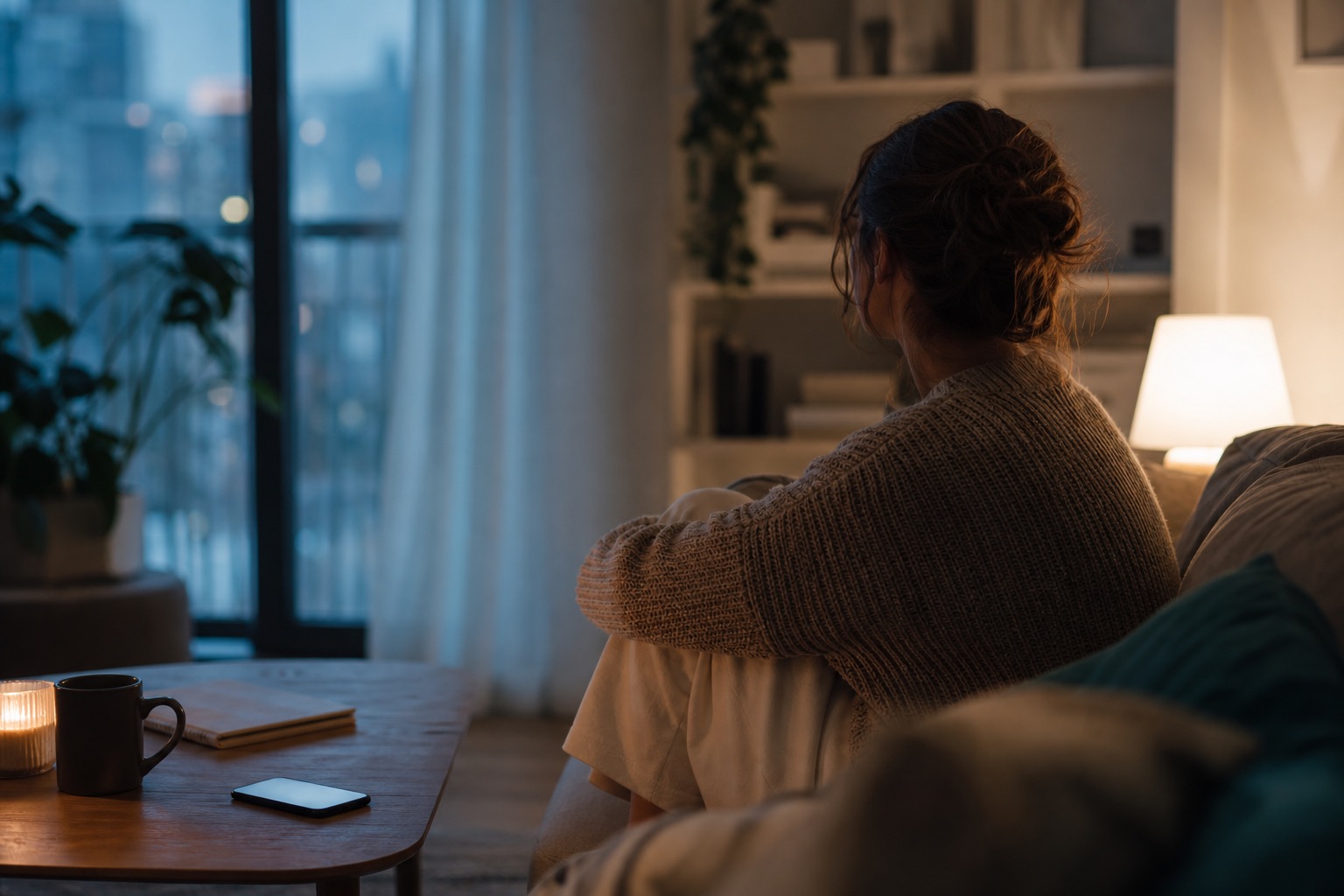
A feed can give you updates without intimacy. A group chat can give you noise without honesty. A comment section can make you visible without making you feel held. Your brain may receive constant social signals while your nervous system still says: I do not feel close to anyone right now.
Why this question matters now
Loneliness is now treated as a serious public health topic. The WHO Commission on Social Connection reports that 1 in 6 people worldwide experience loneliness, with adolescents and young adults among the most affected groups.
A 2026 Washington University study summary described eight-country survey data where nearly half of 18 to 24 year olds reported loneliness. The same research found loneliness was strongly linked with higher odds of screening positive for depression and generalized anxiety. That does not prove cause and effect, but it does make the problem hard to dismiss.
Online contact can be real
It would be lazy to say the internet is fake and real life is always better. Some people find genuine support online, especially when they are isolated, neurodivergent, chronically ill, LGBTQ+, grieving, new in town, or surrounded by people who do not understand them.
The problem starts when online contact replaces the kinds of connection your body also needs: being remembered, hearing a real voice, sharing a room, saying the unpolished sentence, and seeing that someone stays present after you say it.
A small reset for tonight
Do not try to fix your whole social life in one night. That is how loneliness becomes another self-improvement project. Try one small reset instead.
- Name the real feeling: I feel lonely because I want more closeness than I have right now.
- Choose one person you can contact without performing.
- Move one interaction from passive to active: voice note, call, walk, coffee, or honest check-in.
- Use social media with a purpose for ten minutes, then leave before comparison takes over.
- Make your body part of the plan: shower, stretch, eat something steady, or sit near daylight tomorrow.
- Open Mindkeeper if you need a private place to say the messy thing first.
Where Mindkeeper fits
Loneliness often gets worse when it stays vague. You may know you feel bad, but not whether the feeling is rejection, boredom, grief, shame, anxiety, or a lack of everyday closeness. Mindkeeper can help in that middle space through chat and voice, giving you a calm place to name what is happening and choose one grounded next step.
That does not mean replacing people with an app. Mindkeeper is most useful when it helps you return to life with more clarity: sending the message, noticing the pattern, choosing the walk, preparing for the hard conversation, or admitting that you need more support than a feed can give.
If loneliness blends with anxiety, read Mindkeeper's guide on whether an AI chatbot can help with anxiety. If nights are the hardest part, the article on being tired but unable to sleep may fit the same pattern.
What actually helps
The most useful fixes are usually smaller and more specific than people expect. You do not need to become wildly social. You need more moments where your nervous system learns: I am not doing life completely alone.
NHS inform suggests small steps such as leaning on one person, taking pressure off the idea of having a big friend group, and starting with tiny social contact. The Mental Health Foundation also points to everyday connection, meaningful activity, movement, and positive use of social media as practical ways to cope.
If you are lonely for depth, more scrolling will not solve it. If you are lonely for routine, a weekly class may help more than another chat. If you are lonely because anxiety or low mood is making you withdraw, professional support may be part of the answer.
The bottom line
You can be online all day and still feel lonely because connection is not measured in notifications. It is measured in felt closeness, honesty, belonging, and care that reaches your real life.
Use the internet as a bridge, not a hiding place. Use Mindkeeper as a pause, not a replacement for people. Start with one honest sentence, one small reach outward, and one action that brings your body back into the room you are actually living in.
FAQs
Why do I feel lonely even though I have friends online?
Online friendships can be real, but loneliness can still show up when the connection feels too shallow, delayed, public, or disconnected from your everyday life. You may need more emotional honesty, voice, routine, or in-person contact.
Can social media make loneliness worse?
It can, especially when it turns into comparison, passive checking, or constant monitoring for replies. It can also help when it leads to supportive communities, direct contact, or real-world connection.
What should I do first when loneliness hits at night?
Name the feeling without judging it, reduce passive scrolling, and choose one small act of contact or care. Send a simple message, make a voice note, or use Mindkeeper to sort the feeling before sleep.